Books
The best personal finance books, ranked for a reader managing money in India
The ten best personal finance books ranked for Indian readers — which to start with, which classics survive translation to Indian money, and which pages to skip.
The books on this page
As an Amazon Associate, WealthStem earns from qualifying purchases. The links below go to Amazon.in and carry our affiliate tag — buying through them costs you nothing extra, and the order is the order the article discusses them, never the order that pays most. How we make money.





Prices and editions change on Amazon without notice, which is why none are quoted here. Every listing above was last verified against Amazon.in on 21 August 2026 — if a link ever lands somewhere unexpected, tell us.
Most best-personal-finance-books lists are American lists with the serial numbers filed off, and an Indian reader who follows one ends up fluent in Roth IRAs and baffled by their own Form 16. This list is built the other way: ten books ranked by how much they change what an Indian reader does with actual Indian money — and every US book on it carries a note saying which chapters do not survive the flight.
The ranking logic is simple and worth stating. Behaviour books rank above mechanics books, because mechanics date and behaviour compounds. India-specific books rank above imported ones at the same quality, because a book you can act on this week beats a book you must translate. And motivation books rank last no matter how famous, because motivation without mechanics is how people end up in instant-loan apps. That is why the most famous book in the genre sits tenth, not first — the full review explains.
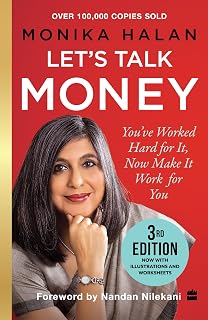
1. Let’s Talk Money — Monika Halan
The best single book on running money in India, and not by a small margin. Halan, one of India’s most respected personal finance journalists, builds a complete system — separate accounts for spending, saving and investing, insurance bought as protection rather than investment, funds chosen by category logic — entirely inside Indian products and Indian regulation. It is the rare money book you can implement the week you finish it: open the accounts, set the standing instructions, done. The third edition refreshes the product landscape. Its limit is scope by design — it will not teach deep investing, and it does not pretend to. Every other book on this list assumes a reader who has done what this one teaches.
2. The Psychology of Money — Morgan Housel
Published in 2020 and already the modern classic on money behaviour: twenty short chapters on why smart people do foolish things with money — the role of luck, the difference between getting wealthy and staying wealthy, why “enough” is the rarest financial skill. Nothing in it is India-specific and nothing in it needs to be; behaviour is the universal layer. It pairs perfectly with Halan: her book tells you what to do, this one keeps you doing it through a crash. We keep a chapter-wise summary and review if you want the ideas before the purchase. The caveat is honest: it changes how you think, not what you do on Monday — which is exactly why it is second here and not first.
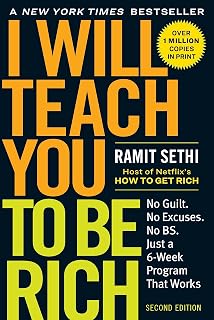
3. I Will Teach You to Be Rich — Ramit Sethi
The best systems book in the genre: a six-week programme that automates the entire flow of a salary — bills, savings, investments — so that good behaviour stops depending on willpower. Sethi’s tone (brash, funny, anti-frugality-theatre) either delights or grates; his core insight is permanent either way: automate the important, then spend guiltlessly on what you love. The translation cost is real — his account recommendations, credit card chapters and index fund specifics are American — but the architecture maps onto Indian banking cleanly: standing instructions, auto-SIPs on salary day, one spending account. Read it for the plumbing diagram, then build with Indian pipes; our first credit card guide covers the Indian version of his credit chapters.
4. From the Rat Race to Financial Freedom — Manoj Arora
The most complete Indian book on the full journey from salary to financial freedom, written by an engineer who did it and shows the worksheets. Arora’s strength is exhaustiveness: goal arithmetic, asset allocation, insurance, real estate, the psychology of staying the course, all with Indian numbers and instruments. Its weakness is the same thing — it reads like the engineer’s manual it is, and the prose will not carry you the way Housel’s does. For a salaried reader who wants one Indian book that covers everything Halan’s deliberately compact book leaves out, this is it.
5. Your Money or Your Life — Vicki Robin & Joe Dominguez
The book that invented the most clarifying question in personal finance: what is this purchase costing in hours of your life? Convert your real hourly earnings into the price of things and spending changes permanently — a ₹40,000 phone priced in workdays is a different object. The full nine-step programme, tracked to the rupee, is more discipline than most readers will sustain, and the investment chapters are US-flavoured and dated. Nobody forgets the lens, though, and the lens is the point. The spiritual ancestor of every FIRE calculation, including the ones you can run on our SIP calculator.
6. The Millionaire Next Door — Thomas J. Stanley & William D. Danko
The research book: decades of surveys of actual American millionaires, finding that most drive ordinary cars, live in ordinary houses and built wealth by relentless under-spending of good incomes — while the visibly rich were often financing the performance. The data is American and now decades old; the finding transfers to India almost embarrassingly well, where income and wealth are confused daily and lifestyle inflation arrives with every increment. Read it as an antidote to Instagram, skip the tables, keep the phrase “big hat, no cattle”.
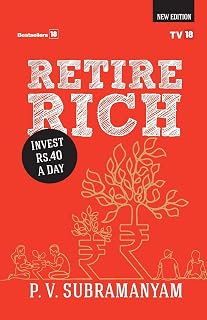
7. Retire Rich: Invest ₹40 a Day — P. V. Subramanyam
The Indian retirement book: what compounding a small daily sum actually builds over a working life, told with Indian instruments and honest arithmetic by one of India’s most experienced financial trainers. Its genius is the reframe in the title — ₹40 a day sounds achievable in a way “build a retirement corpus” never does — and its worked examples make the PPF and SIP arithmetic concrete. It is narrower than the books above it, and the writing is workmanlike. On the single subject Indians most postpone, narrow and concrete is precisely what works.
8. The Richest Man in Babylon — George S. Clason
The oldest rules in the genre, told as parables of ancient Babylon: pay yourself first, a tenth of all you earn is yours to keep, guard against loss before chasing gain, insure against misfortune. Nothing in its pages will surprise a modern reader, and that is its value — the fundamentals in a form that sticks, readable in two evenings, giftable to a twenty-two-year-old who would never open Halan. The archaic diction charms some readers and exhausts others. As the only book on this list a century old, it earns its place by having nothing in it that has dated.
9. Atomic Habits — James Clear
Not a money book, and on this list anyway, with that stated plainly. Every money plan on this page — the automation, the tracking, the monthly review — survives or dies as a habit, and Clear’s is the best operating manual for habits yet written: make the good behaviour obvious and easy, make the leak invisible and hard, let identity do the compounding. Readers who have failed the same budget three times usually have a habit-design problem, not a knowledge problem. Read it when the plans from books one to eight keep not sticking.
10. Rich Dad Poor Dad — Robert T. Kiyosaki
The most famous personal finance book ever written, ranked last and included anyway — both deliberately. Its one great contribution, the asset-versus-liability lens, permanently changes how readers see their house, their car and their EMIs, and for many Indians it is the first book that makes money feel directable at all. Around that lens sits an instruction layer that is American, dated and sometimes reckless, and a seminar ecosystem behind the book that deserves the criticism it has drawn. Read it fast for the lens, ignore the instructions, and see the full summary and honest review for exactly which is which.
How to actually read this list
Not one to ten. Start with Halan and set up the accounts; add Housel the same month for the behaviour layer. That pair is a complete basic education. Then choose by symptom: money vanishes monthly → Sethi’s automation, or the money management shelf; retirement anxiety → Subramanyam; plans that never stick → Clear; spending that needs a jolt → Robin’s hours-of-life lens. The classics — Clason, Stanley, Kiyosaki — are dessert: read them for reinforcement once the system runs, not for instructions before it exists.
One boundary, stated honestly: nothing here teaches investing in shares or picking funds. That is a different genre with different failure modes, and it lives on our sister site — gale.in keeps the investing and trading reading lists the same way we keep these.
Common questions
Which personal finance book should an Indian beginner read first?
Let's Talk Money by Monika Halan. It is the one book on this list written entirely inside the Indian system — the accounts, the insurance traps, the fund categories are the ones you actually face — and its three-account structure can be set up the week you finish reading. Pair it with The Psychology of Money and you have the mechanics and the behaviour covered in two short books.
Are American personal finance books worth reading in India?
The behavioural ones, absolutely — money psychology does not change at the border, which is why The Psychology of Money and The Millionaire Next Door rank high here. The mechanical ones need translation: tax chapters, account types and debt playbooks are US-specific, and this list flags which parts to skip in each. A US book read for its principles is useful; one followed as instructions is a trap.
Are these books available in Hindi?
Several are — Rich Dad Poor Dad and The Psychology of Money both have solid Hindi editions on Amazon.in, and our reviews link them where they exist. Even Let's Talk Money has its own Hindi edition, Baat Paise Ki — the Hindi shelf is thinner than the English one, but no longer empty.
Do books about investing in shares belong on this list?
No — deliberately. Personal finance is the system around your money: earning, spending, protecting, saving and only then investing. Stock market and trading books are a different genre with different failure modes, and our sister site gale.in maintains those reading lists separately.
Sources
Rates and rules on this page were read directly from the following sources on the dates shown. Figures change — if you are about to act on one, confirm it at the source.