Books
Rich Dad Poor Dad, summarised — and reviewed honestly for an Indian reader
A chapter-wise Rich Dad Poor Dad summary in plain language — the six lessons, what genuinely holds up, what fails in India, and who should actually read it.
The books on this page
As an Amazon Associate, WealthStem earns from qualifying purchases. The links below go to Amazon.in and carry our affiliate tag — buying through them costs you nothing extra, and the order is the order the article discusses them, never the order that pays most. How we make money.


Prices and editions change on Amazon without notice, which is why none are quoted here. Every listing above was last verified against Amazon.in on 21 August 2026 — if a link ever lands somewhere unexpected, tell us.
Rich Dad Poor Dad, published in 1997, is the best-selling personal finance book ever written and the most argued-about. Robert Kiyosaki frames it as lessons from two fathers — his own highly educated, salaried “poor dad” and a friend’s entrepreneurial “rich dad” — and uses the contrast to make one claim: the middle class stays where it is because it works for money and buys liabilities it believes are assets.
This page does two jobs. First, an honest chapter-wise summary in plain language, so you know exactly what the book argues. Second, a review that most pages selling the book will not give you: what holds up nearly three decades on, what is simply wrong for an Indian reader, and who should read it anyway. The verdict up front: it is a genuinely useful mindset book wrapped around a frequently useless instruction book, and readers get in trouble when they confuse the two.
The premise: two dads, one argument
Kiyosaki’s poor dad has a PhD, a stable government job, and money worry that never ends. His rich dad has an eighth-grade education and a growing business empire. The book’s engine is the difference in what each man teaches: poor dad says study hard, get a secure job, buy a house; rich dad says make money work for you, mind your own business, and learn what school never teaches — how money actually moves.
Whether the rich dad existed as described has been debated for years, and it barely matters: the book is a parable, and its arguments stand or fall on logic, not biography. What matters more for an Indian reader is that poor dad’s advice — degree, government job, house — is close to the default script of an Indian middle-class upbringing, which is exactly why the book lands as hard here as it does.
Lesson 1: the rich don’t work for money
The opening lesson, told through nine-year-old Kiyosaki working unpaid in rich dad’s store: most people’s financial lives are run by fear and desire — fear of not paying bills, desire for what a payslip buys — so they spend their lives working for money. The alternative is to make money work for you by owning things that generate it.
What holds up: the diagnosis of the fear-and-desire treadmill is real and permanent. Salary rises are absorbed by lifestyle almost immediately at every income level, in Mumbai as much as Manhattan.
What doesn’t: the lesson implies employment itself is the trap. It is not — a good salary aggressively saved and invested remains a perfectly good route. The SIP calculator will show you what a disciplined surplus compounds into; no business ownership required.
Lesson 2: assets versus liabilities — the one chapter that matters
The book’s core, and its genuinely great contribution: an asset puts money into your pocket; a liability takes money out. The rich buy assets. The middle class buys liabilities it calls assets — chief among them the family home, which consumes EMI, maintenance and tax while producing nothing.
This definition is deliberately not the accountant’s, and its crudeness is its power. Once installed, it reorganises how you see every purchase: the car, the bigger flat, the depreciating gadget bought on EMI. It is the single most useful mental tool in the book, and for many Indian readers it is the first time anyone has told them their house is not making them rich.
The honest caveats: a home you live in is also not the villain a devoted reader concludes it is — it caps your largest lifetime expense, rent, and forced EMI discipline is the only saving many households ever manage. The EMI calculator makes the real cost of that discipline visible. The correct lesson is narrower than the book’s rhetoric: buy the home you need, not the largest one a bank will finance, and never call the difference an investment.
Lesson 3: mind your own business
Keep your day job, Kiyosaki says, but build your own asset column on the side — your “business” is not your employer’s payroll entry for you, it is the collection of things you own that earn. His asset list is American: businesses that run without you, stocks, bonds, income-generating real estate, notes, royalties.
The principle translates to India cleanly; the list needs rewriting. For a salaried Indian the practical asset column is equity funds through SIPs, EPF and PPF compounding quietly, perhaps a rental property entered with open eyes about yields, perhaps a side practice that earns. The NPS versus PPF comparison covers the retirement pillars of that column.
Lesson 4: taxes and corporations
The book’s weakest chapter for a non-American reader. Its argument — the rich structure income through corporations so expenses come before tax, while employees are taxed before they spend — is built entirely on US structures and US history, and the book’s tax commentary should be treated as motivation rather than instruction in any country. Indian tax law differs in its machinery, changes often, and rewards actual professional advice over paperback generalisation. Take the transferable core — understand how your income is taxed instead of treating tax as weather — and leave the specifics on the shelf. Our income tax calculator reflects the current Indian rules whenever you want the real numbers.
Lesson 5: the rich invent money
Financial intelligence, Kiyosaki argues, is seeing opportunities others miss — his examples are 1990s American foreclosure deals bought cheap and flipped. This chapter has aged worst. The specific playbook does not exist in India’s property market, and the chapter’s swagger about deals has led more readers into leveraged speculation than into wealth. The durable residue is modest: financial literacy compounds, and the person who understands instruments sees options the person who fears them cannot.
Lesson 6: work to learn, not for money
Take jobs for the skills they teach — sales, marketing, communication — rather than the salary they pay. Kiyosaki’s own résumé (Marines, Xerox sales) is the illustration. This is quietly one of the book’s better lessons and the least controversial: early-career skill acquisition out-compounds early-career salary optimisation, and the advice costs nothing to follow.
What the book gets right, three decades on
Three things, and they are big: money behaviour is taught at home and the default script keeps people dependent; the asset-versus-liability lens is a permanent upgrade to how you see spending; and financial literacy — actually understanding what you own — is a skill, not a birthright. Readers who take only these three ideas get real value, which is why the book stays on our best personal finance books list despite everything below.
What the book gets wrong, or wrong for India
The instruction layer fails four ways. Its mechanics are American — the tax structures, the property plays, the specific vehicles. Its property arithmetic assumes rental yields and financing conditions that Indian metros simply do not offer. Its contempt for salaried work reads as licence to quit jobs and “start businesses” undercapitalised — the failure mode of many devoted readers. And its sequels and seminar ecosystem monetise the motivation the first book generates; none of them is necessary, and the paid seminars in particular have drawn documented criticism for years. Read the book; skip the funnel behind it.
Who should read it — and in which edition
Read it if money still feels like something that happens to you, if you have never questioned the buy-the-biggest-house script, or if you need motivation more than mechanics — it remains the most effective motivation-delivery device in the genre. Skip it if you already run SIPs, know your asset column, and want technique; you have outgrown it, and The Psychology of Money is the wiser book on behaviour. The Hindi 20th-anniversary edition is a faithful full translation and the right buy for a reader more at home in Hindi.
Read fast, keep the lens, discard the instructions, and give the motivation Indian mechanics from the money management shelf.
Common questions
Is Rich Dad Poor Dad still worth reading?
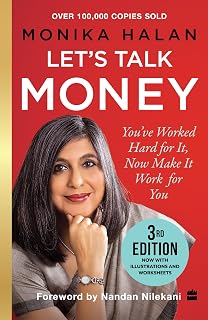
As a first push, yes — it reframes money as something you direct rather than something that happens to you, and it does that better than almost any book since. As a manual, no. Its instructions are American, dated and thin, and its rental-property arithmetic does not survive contact with Indian yields. Read it fast for the mindset, then move to a book with Indian mechanics such as Let's Talk Money.
Was rich dad a real person?
Readers and journalists have debated for years whether the rich dad of the title existed as described, and Kiyosaki's own accounts have varied. It changes less than you might think: the book works as a parable either way, and its useful ideas stand or fall on their own logic, not on the biography behind them. Treat it as a teaching story rather than a memoir and the question stops mattering.
Is the Hindi edition of Rich Dad Poor Dad faithful?
The Hindi edition translates the full text and keeps the structure, and for a reader more comfortable in Hindi it is the better buy — the book's value is its framing, which survives translation completely. Financial terms are transliterated rather than invented, so nothing important is lost.
What should I read after Rich Dad Poor Dad?
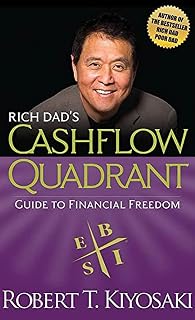
If it lit the motivation, give the motivation Indian mechanics: Let's Talk Money by Monika Halan for the system — accounts, insurance, funds — and The Psychology of Money for a wiser, better-evidenced take on behaviour. If the employee-versus-owner framing specifically gripped you, Cashflow Quadrant expands it, with the same caveats scaled up.
Sources
Rates and rules on this page were read directly from the following sources on the dates shown. Figures change — if you are about to act on one, confirm it at the source.