Books
The Psychology of Money, summarised — the ideas that matter and what to do with them in India
A plain-language Psychology of Money summary — Morgan Housel’s big ideas on luck, greed, compounding and enough, reviewed honestly for an Indian reader.
The books on this page
As an Amazon Associate, WealthStem earns from qualifying purchases. The links below go to Amazon.in and carry our affiliate tag — buying through them costs you nothing extra, and the order is the order the article discusses them, never the order that pays most. How we make money.



Prices and editions change on Amazon without notice, which is why none are quoted here. Every listing above was last verified against Amazon.in on 21 August 2026 — if a link ever lands somewhere unexpected, tell us.
The Psychology of Money, published in 2020, is built on one claim: doing well with money has little to do with how smart you are and everything to do with how you behave. Morgan Housel — a financial writer with a gift for the resonant story — spends twenty short chapters showing that the maths of money is easy and the behaviour is hard, which is why brilliant people go broke and patient janitors die wealthy.
This page summarises the ideas that carry the book, in plain language and our own words, then reviews it honestly for an Indian reader — including the one thing the book deliberately will not do for you. It has become the most recommended money book of its generation; unusually, it deserves it, and it sits second on our ranked personal finance list for reasons this page makes clear.
The frame: nobody is crazy
The opening move disarms every money argument you have ever had. Everyone’s money behaviour looks irrational from outside and feels sensible from inside, because everyone learned about money from the world they happened to grow up in. A reader who watched a parent’s business fail prices risk differently from one raised on a government salary and a pension — not because either is foolish, but because each is running on different lived evidence. In an Indian household, where three generations’ money instincts often share one roof — gold and land for one, FDs for the next, equity SIPs for the third — this chapter alone pays for the book: it converts family money arguments from character judgements into history lessons.
Luck and risk are the same force, facing opposite directions
Every outcome is effort plus something outside your control. Housel’s discipline: judge less from single outcomes, your own included. The neighbour whose smallcap tripled is not a genius; the colleague whose startup equity died is not a fool; and your own best trade owed more to timing than your memory of it admits. The practical residue is humility in position sizing — never bet so much on being right that being unlucky ruins you — a lesson retail derivatives traders rediscover expensively every cycle.
Enough is the hardest financial skill
The chapter Indians probably need most, in a decade when someone in your feed is always visibly richer. Housel’s argument, in his own words, is that “the hardest financial skill is getting the goalpost to stop moving” — because everything worth having — reputation, family, freedom — has been traded away by people chasing more they did not need. The comparison ladder has no top; the only winning move is declining to climb. No calculator on this site can compute “enough”; the book’s case is that you must, and that most financial ruin is the absence of the number.
Compounding: shut up and wait
The book’s engine room. Housel’s treatment of compounding is deliberately anti-dramatic — the returns that matter are not the best returns but the returns you can sustain for the longest time, because time is the exponent. Good investing is mostly not interrupting the process: not selling in crashes, not switching strategies annually, not pausing SIPs when headlines are loud. An Indian reader can watch the argument become arithmetic on our SIP calculator — stretch the tenure slider and watch the final third of a long SIP earn more than the first two-thirds combined. That shape is the whole chapter.
Getting wealthy and staying wealthy are different skills
Getting wealthy takes optimism and risk; staying wealthy takes paranoia and frugality — survival first, upside second. Housel’s room-for-error doctrine follows: plan on the plan not working, hold more safety margin than looks efficient, and never expose yourself to ruin however good the odds. In Indian terms: the emergency fund in an FD that a bull market makes look lazy is the thing that lets your equity SIPs survive the bear market unpaused. Barbells beat elegance.
Wealth is what you don’t see
Two adjacent chapters carry the book’s most quoted idea, starting with the man-in-the-car paradox: nobody admires the driver, they admire the car and imagine themselves in it. Spending money to display wealth is the fastest way to have less of it; actual wealth is the invisible remainder — income not spent, options not exercised. In an India of visible consumption financed by instant credit, this chapter reads like reportage. Its companion rule — save without needing a reason — is the book’s most practical instruction: savings is the gap between income and ego, and flexibility is what the gap buys.
Reasonable beats rational
The book’s most forgiving idea, and its most useful for staying invested. The mathematically optimal plan you abandon in year two loses to the merely sensible plan you can hold for twenty years. If a small allocation to something you love, or a home loan prepaid faster than arithmetic recommends, keeps you calm enough to stay the course — that “suboptimal” choice is winning. Housel would rather you be reasonable and durable than rational and brittle, and anyone who has watched SIP flows swing with market mood knows he is right about people.
The honest review
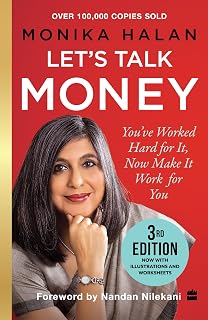
What the book is: the best-written case ever made that behaviour beats analysis, in prose so clean the chapters read like parables, universal enough that nothing important dies in translation to Indian money. What it is not: a manual. It contains no instruments, no allocation, no tax, no steps — Housel says plainly that he is telling you how to think, and the final chapter’s confession (his own money sits in index funds and cash, held simply) is the closest it comes to advice. Read it with an implementation book — Let’s Talk Money on our money management shelf is the Indian pairing — or its wisdom evaporates into agreement. And read it before its ideas reach you second-hand and flattened; half of Indian finance Twitter is unattributed Housel now, and the originals are better. The Hindi edition carries the register faithfully; Same as Ever, his second book, extends the method from money to everything that never changes.
Common questions
Is The Psychology of Money worth buying if I have read this summary?
If the ideas above felt new, yes. A summary can hand you the conclusions; the book's power is its stories — the janitor who died a multimillionaire, the executive who went bankrupt — and stories are what change behaviour at 2 a.m. during a market crash. Readers who already live these principles can skip to Same as Ever, Housel's second book, without loss.
Does The Psychology of Money apply to Indian investors?
Almost perfectly, which is rare for an American money book. It contains no tax advice, no account types and no product recommendations — only behaviour, which crosses borders intact. The one translation needed: his examples compound in dollars through US market history. Run the same logic on Indian instruments with a SIP calculator and the lesson lands identically.
Is the Hindi edition of The Psychology of Money good?
The Hindi edition (Dhan Sampatti Ka Manovigyan) carries the full text and keeps Housel's plain register well — the book's short chapters and story-driven style survive translation better than most finance writing. For a reader more comfortable in Hindi, nothing important is lost.
What should I read after The Psychology of Money?
For more Housel, Same as Ever — his second book, on what never changes. For the Indian mechanics his book deliberately omits, Let's Talk Money by Monika Halan. And if the behaviour chapters gripped you, the full best personal finance books list orders the rest of the shelf.
Sources
Rates and rules on this page were read directly from the following sources on the dates shown. Figures change — if you are about to act on one, confirm it at the source.